Service · Cape Town
Office Refurbishment — Cape Town
Refresh and reconfigure your existing office without a full strip-out. The discipline of a fit-out programme, run inside a live, occupied space — with minimum downtime.
Scope
What office refurbishment covers
The scope is whatever the brief says — that's the point. Any combination of the below, fixed and priced upfront.
01
Finishes + lighting
Flooring, paint, ceiling tiles, signage; modernised fittings, LED conversion, daylight responsiveness. The lowest-cost route to a noticeably improved space, often paying back in electricity cost.
02
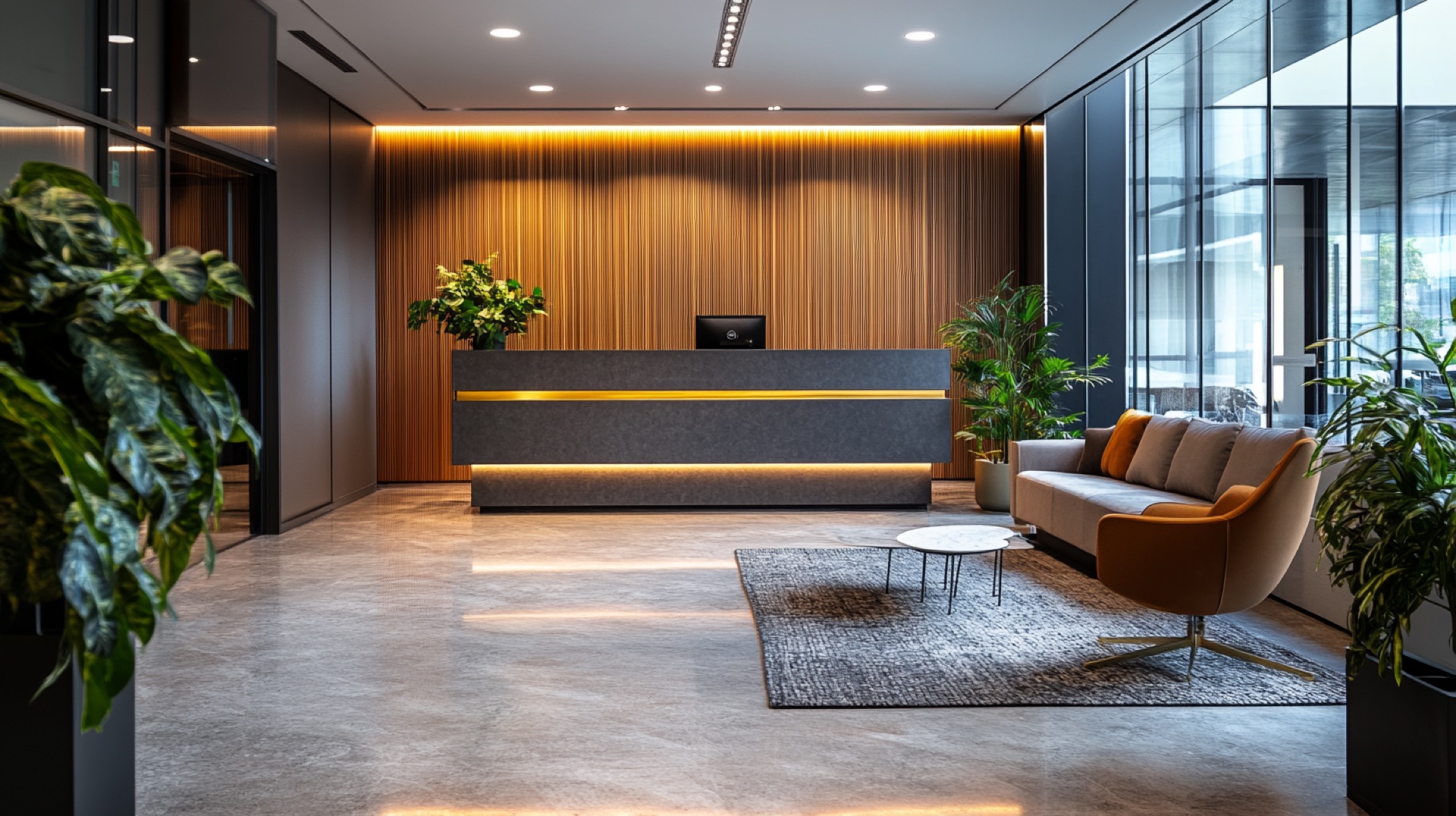
Reception + front-of-house
The space clients see — usually the single highest-leverage area to refurb when budget is constrained.
03
Partial reconfiguration + services
Adding a meeting room, reworking a breakout, adjusting the open-plan-to-private ratio; HVAC zoning, electrical capacity, data and access control. Without a full strip.
15+
Years in Cape Town
40+
Municipal submissions since 2016
Level 1
BEE Contributor
R250k+
Typical project range to R3m
Process
How First Gate runs a refurbishment
- 01Step 01
Walk-through + scope-and-priority
We start with the existing space and a session on what's working, what's not, and the team's day-to-day frustrations. Then a scope-and-priority list with the trade-offs called out: 'for budget X you can do A and B comfortably, or A and a lesser C — not all three to the standard you want.'
- 02Step 02
Sequenced around occupancy
Live-office refurbishments are programmed to keep the team productive: work zoned off, noisier trades after hours, dust and noise managed against the working day.
- 03Step 03
Honest elapsed time
We programme for elapsed time, not just trades-time. A four-week scope can take eight weeks of elapsed time if the team is in the office through it — and we say so upfront.
- 04Step 04
Compliance confirmed early
Most refurbishments don't trigger a council submission. We confirm whether yours does at the brief stage, not at month two.
Scope
What this service is, and isn't.
When it fits
When refurbishment is the right answer
- The bones of the space still work — location, floor plate and structural layout still map to how the team operates.
- The lease has years to run, so the value is recovered over a long enough tenure.
- The team can't be displaced for a full strip and has to keep operating from the office during the work.
- Landlords refreshing a building between tenants, or owners lifting front-of-house before a sale.
When it doesn't
The layout no longer works
If headcount has outgrown the space or the open-plan-to-private ratio is wrong, patching finishes onto an unsuitable layout is an expensive disappointment. Strip and re-fit — see office construction.
The works trigger a council submission anyway
Once the scope is extensive enough to need approval, refurb's faster-cheaper-lighter advantage disappears. At that point it's a heavy-refurb-vs-fit-out conversation — see design and build.
Why First Gate
The discipline of a fit-out, the awareness of a refurb
Refurbishments inside working offices need different programming, protection and communication than empty-space fit-outs. We run them as a planned engagement, not a series of small jobs.
01 / Programme discipline
One project lead, fixed scope
Most contractors run a refurb as ad-hoc small jobs and miss the programme management that prevents cost and time creep. We run it as a planned engagement with one accountable lead.
02 / Live-office sensitivity
Minimum downtime
We've done enough live-office refurbishments to know what costs you elapsed time and what doesn't. Work is zoned, sequenced and communicated around your working day.
03 / Level 1 BEE Contributor
15+ years, compliance in-house
40+ municipal submissions since 2016. We can tell you whether your specific scope triggers a council submission before you spend money on a design that won't pass.
Selected Work
Recent projects in this category
First Gate's completed Cape Town work. Click any project to view the full gallery.
FAQ
Frequently asked questions
- A fit-out starts from a stripped, base-building condition. A refurbishment starts from an existing working office and updates parts of it. Refurbishment is usually faster, less disruptive, and significantly cheaper per square metre — but only if the existing layout still works for the team. If it doesn't, refurb is the wrong tool.
- Usually yes, with the right programming. Noisier trades run after hours or in zoned-off areas, dust and noise are managed, and the work is sequenced so people aren't constantly displaced. The trade-off is that elapsed time is longer than for the same scope in an empty space.
- Most don't. Purely cosmetic work — finishes, paint, lighting, signage, loose furniture — never triggers a submission. Layout changes that affect fire escape routes, sanitary fittings, or change the building's use classification do. We assess this at the brief stage, before any money is committed.
- For finishes and lighting only on a 500 m² office, three to five weeks of trades-time. For partial reconfiguration with services modifications, six to ten weeks. Add elapsed-time slippage if the team is in the office through the work — typically thirty to fifty per cent on top of trades-time.
- Fixed-scope, fixed-price against the agreed brief. We don't refurb on open-ended hourly billing because the scope question — what to do and what to leave — is decided upfront, not during.
- Most of our refurbishment work sits between R250,000 and R3 million in total project value, with footprints between 150 and 1,500 m². Smaller single-trade refurbishments tend to be conversations about whether refurb is really the right call versus a fit-out.
- Within two business days. We come back with a scope-and-priority list, a programme outline, and a fixed price. The initial assessment is free.
Get an instant estimate
Price your fit-out in two minutes.
Tell us the space, the headcount and your timeline. Get an on-screen budget range instantly — no phone call, no obligation.